Tuesday, 29 September 2009

Hyenas 1- Duncan 0


Hyenas 1 - Duncan 5

Oh well it had to happen, I just hope not too often. I used to have 6 cameras, I now have 5.
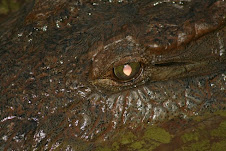
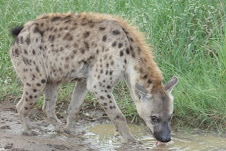
I put the cameras out last night as usual and on inspection found one missing. It wasn’t the children or poachers but on inspection the only spoor in the area were mine and a hyena. The camera had been torn from its cord and was now missing. I had a quick search of the area and found nothing however when I returned I decided to follow the hyena tracks along the road and where they finished concentrated my search in the bush there. Luckily and to my surprise we found the camera and believe it or not it was still working and intact, except for half of the front cover. I took it back to base and downloaded the images. It looks a si-fi ish. The inside of a hyenas mouth is quite scary but you can’t see too much details because the Infra red flash makes it very bright.
Well done to Bushnells for making such a robust camera, it still works but I don’t think it will be water tight.
Keep looking at my blog and pass details onto your friends.

Sunday, 27 September 2009

Leopard at last


Cameras
I have been placing the cameras around the main Lifupa camp for the past few days. It is actually quite exciting but also disappointing on occasions when things don’t turn up as you would like.
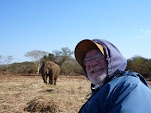
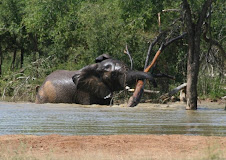
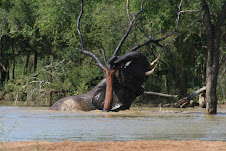
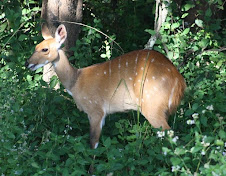
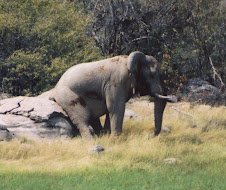
To date they have captured: bush buck (male and females) elephant, buffalo, hyena, bush pig, civet, large spotted genet, common duiker and at last a leopard. The elephant are quite interesting as they show their relative sizes. Some you can see right under their bellies and yes I have been chased by a large elephant the other day. It was lucky I was in the land rover.
I have started making up data sheets and will be recording any distinguishing marks on the large carnivores. This leopard has some patterns on the rear right leg and right hand rear flank. I think by the size of its head that it is a female but you may correct me if you think differently.

Solar panel


Hot water
Next to the house is an old solar water heating system and nobody here can ever remember it working. It may be for as long as 20 years, but quess what? For a sum of around 5000Mk I have a sustainable supply of hot water for the house. People are amazed and now call me the scientist.
Considering this is a national park a lot of the staff and their families do not seem to use their brains. There is always litter in the bush, plastic bags etc, they constantly run out of water in their houses because they put their buckets under the tap and leave it running for an hour, then moan about when they have no more water?
I am going to try and change their attitudes towards both of these issues but I think it will be an uphill struggle. I’ll let you know how I get on.
I have a lady in the compound that that makes fresh bread so that is quite a relief. It saves me having to eat week old bread for lunch.

Cave paintings and iron kiln


Kasungu National Park Cave (paintings and iron kiln)
The park is known for a cave painting in the northern mountains around Miondwe. The cave is set in the side of one of the hills and has a couple of cave paintings. Not being an expert on cave paintings all they appear to be are a series of parallel lines in red. There are no humans or animals depicted. These are very quickly being eroded away and some say it is the Zambian poachers that are doing this deliberately. The less tourists that come to see them means the easier it is for the poachers to poach without being caught.
To get to the paintings it is a 2 hour drive from Lifupa main camp and the iron kiln is around 1.5 hours drive.
Close by to the paintings is the last remaining intact iron smelting kiln. This used to be protected by a fence many years ago but has long disappeared. This kiln is around 2 meters tall and about 1m in diameter. The exact age is unknown but believed to be used before the park was declared a park around 100 years.
The area around the mountains is quite unusual for this part of Malawi and quite beautiful. Most of the animals around here have all been taken by poachers so don’t expect to see anything in this area.

Monday, 21 September 2009

Kasungu National Park


I am having problems with usual e-mail address so if you need to contact me try, duncanyearley1@googlemail.com

I am now back in Kasungu National Park and have started to use the cameras in the bush.
The only results so far are; bush buck, bush pig, civet.
I have carried out several transects in the bush and have come across a surprisingly large amount of wildlife including elephants, 30+ buffalo, kudu, 9 roan which were grouped with 5 zebra plus the usual reed buck, puku and dyker. Birds include red crested koorhan and marshal eagle.
The most exciting find from my point of view was a large 3m black mamba which was sunning its self on the track in front of the vehicle. I was too slow in getting my camera out as it was an exceptional specimen.
The land rover is going ok but will need a good service soon.
I have been talking to the school head master in the park with regards to starting up a wildlife club for the youngsters. My aim here is to educate the park staff on good management of the park with regards to litter and the inefficient use of water as well as to try and stop them washing their cloths in the rivers.