
PROJECT PROPOSAL
Securing
viable populations of African wild dog and other carnivores in Kasungu National
Park, Malawi
Paper submitted: by Mr. Duncan
Yearley, WESM
Contact details
Project Manager: Duncan Yearley
Carnivore Conservation Malawi,
WESM Lilongwe Branch, The Nature Sanctuary,
P.O. box 30293 Lilongwe 3, Malawi.
(Chairman of WESM Lilongwe Branch)
Nick Hall
WESM Lilongwe Branch, The Nature
Sanctuary,
P.O. box 30293 Lilongwe 3, Malawi.
Telephone
number(s)
Duncan Yearley – Malawi +265 (0)999202042,
Nick Hall – Malawi +265 (0) 888839804
E-mail addresses
Web sites: www.wildlifemalawi.org
www.carnivoreconservationmalawi.org
List of abbreviations.
WESM – Wildlife and
Environmental Society of Malawi
DNPW – Department of
National Parks and Wildlife.
KNP – Kasungu National
Park
ATP – Act to Protect
Total
Estimated cost for 2 years: US$ 86,580
Start
date: April 2012
End
Date: April 2014
Contents
Title:........................................................................................................................... 2
Projected start date:................................................................................................ 2
Duration of project:................................................................................................. 2
SOS Strategic Area:................................................................................................... 2
(i) Conservation Problem: (Previous and
ongoing studies, conservation efforts and actors) 2
(ii) Target Taxa and Critical Habitat...................................................................... 2
(iii) Summary of Conservation Status and
estimated trajectory of target species in terms of Red List Categories and
Criteria............................................................................................ 3
(iv) Proposed activities and justification
for their effectiveness in benefiting the species 4
(v) Social Context..................................................................................................... 5
(vi) Monitoring and evaluation approach,
with specific indicators and benchmarks for achieving objectives................................................................................................................................... 5
(vii) Risk assessment and approach for
dealing with uncertainty..................... 6
(viii) Conservation partners,
collaborations, stakeholders, and consultants directly involved in implementing
and planning the project................................................................. 7
(ix) Plans for ecological and conservation
long term sustainability and replicability 7
(x) Communications and reporting........................................................................ 8
(xi) Detailed budget and justification..................................................................... 8
(xii) References...................................................................................................... 11
Title: Securing
viable populations of African wild dog and other carnivores in Kasungu National Park , Malawi
(i) Conservation
Problem: (Previous and ongoing studies, conservation efforts and actors)
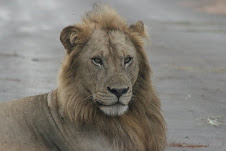
The Kasungu NP is also home to limited numbers
of lion, leopard and possibly cheetah. Many cheetahs used to
exist in the park however there have been few confirmed sightings in recent years. There are plans to possibly reintroduce cheetah and
lion to some of Malawi’s national parks.[i]
While
previous and on-going efforts are in place to conserve the parks endangered and
vulnerable wildlife species, human and financial resources are limited. Malawi’s DNPW
is greatly under-resourced and has little current data on Kasungu NP’s wildlife
populations other than that collected through a wildlife count conducted by the
Wildlife and Environmental Society of Malawi (WESM).
The count, which was undertaken by trained
volunteers, indicated diminishing numbers of mammals in the park; almost to
critical levels. Kasungu NP’s diminishing mammal populations can largely be
attributed to poaching (particularly the poaching of prey species), disease and
human encroachment.
Action is needed now and for the short term
consideration due to the level of poaching taking place on a daily basis. Other
long term actions are planned for the long term solutions but these take a long
time to implement and time is running out for the future of KNP.
(ii) Target Taxa and Critical Habitat
This project
will target the following taxa:
|
KINGDOM
|
PHYLUM
|
CLASS
|
ORDER
|
FAMILY
|
|
ANIMALIA
|
CHORDATA
|
MAMMALIA
|
CARNIVORA
|
CANIDAE
|
|
ANIMALIA
|
CHORDATA
|
MAMMALIA
|
CARNIVORA
|
FELIDAE
|
Located
on the Central African Plateau (1,000–1,100 m) in the Western part of
Central Malawi and extending along the Zambian border, Kasungu NP is Malawi
Land
encroachment, deforestation and water pollution are the major threats to the
critical habitat of the target taxa and their prey species in Kasungu NP. These threats have had
a significant impact on wildlife populations in the park with many
native species now believed to be absent and some even extinct. These include
Black Rhinoceros, giraffe, cheetah and side striped jackal.
Land
encroachment is particularly widespread along the western Zambian and eastern
Malawian borders. Land is cleared for tobacco farming and/or planting
eucalyptus plantations to obtain firewood to dry tobacco. Little progress has
been made in stopping encroachment into the park during the last decade and the
problem is getting worse.
Another
major concern is that communities are permitted to collect certain natural
resources within the five kilometre buffer zone along the eastern side of the
park. This is where the majority of illegal activities take place, including
tree cutting and snaring. This buffer
zone is being depleted at an alarming rate.
(iii) Summary of
Conservation Status and estimated trajectory of target species in terms of Red
List Categories and Criteria
|
Family
|
Scientific Name
|
Common Name
|
Conservation Status
|
Population trend
|
|
CANIDAE
|
Lycaon
pictus
|
African
Wild Dog
|
Endangered
|
Decreasing
|
|
FELIDAE
|
Acinonyx jubatus
|
Cheetah
|
Vulnerable
|
Decreasing
|
|
FELIDAE
|
Panthera
Leo
|
Lion
|
Vulnerable
|
Decreasing
|
|
FELIDAE
|
Panthera pardus
|
Leopard
|
Near Threatened
|
Decreasing
|
This project will focus
on the carnivore species found in Kasungu NP, namely wild dogs, lions, cheetah
and leopard. The IUCN Red List lists wild dogs as endangered species with
decreasing populations and lion
and cheetah as vulnerable also with decreasing populations. Leopards are listed
as threatened, with decreasing populations.
Limited numbers of lion, cheetah and wild dog are found
in Kasungu NP and their populations remain very small and widely distributed across
the park. This is largely due to the minimal populations of prey species in the
park. Wild dogs have now been successfully recorded but need protection.
(iv) Proposed
activities and justification for their effectiveness in benefiting the species
Data Collection:
DNPW scouts will be equipped and trained in the use
of GPS field data capture devices to enable
them, even if they are illiterate, to capture detailed poaching and wildlife
information digitally as they conduct their daily patrols. The Trimble Juno SB
hand held device with CyberTracker software will be used as the primary data
collection device. A dedicated computer and software (GPS Data Management
(GDM)) (See annex 1) will be installed at the field ranger’s HQ office to
ensure easy management and analysis of collected data. This will be overseen by
the principle investigator. Data
and information collected will contribute to the effective management of the
parks carnivore species and to pan-African conservation projects.
A volunteer programme will be established to
contribute to the sustainability of the project and add to wider data
collection. International and local volunteers will undertake field studies aimed
at investigating carnivore populations and will assist with analysing data and
compiling reports.
Camera
trapping and monitoring:
Infrared camera traps will be installed and
monitored in Kasungu NP to observe carnivore populations. Cameras will also
assist with detecting poaching activities. Data collected from the cameras will
be processed at the computer station at the field ranger’s office. Camera traps
will record movements of carnivore species in the park and provide a greater
understanding of their numbers, movement and activities.
Education
and awareness:
An education and awareness programme will be conducted in communities surrounding Kasungu NP
in partnership with the DNPW extension workers, WESM, local organisations and
traditional authorities to improve knowledge and encourage community engagement
in wildlife conservation initiatives.
The programme will also aim to show the potential
for the development of local tourism initiatives in and around the park as an
alternative livelihood opportunity to agriculture. Communities to be targeted on the Malawi
(v) Social Context
In a country with few
income generating opportunities, much of the population relies on agriculture
and/or fishing to survive. Approximately 32% of land in Malawi Malawi
The major threats to
Kasungu NP and its wildlife species are a direct result of the lack of income
generating opportunities alternative to agriculture in the Kasungu area. In
protecting Kasungu’s valuable carnivore populations, the project will contribute
to the long-term development of tourism in Kasungu NP and the creation of
alternative income generating opportunities for local communities. The
volunteer programme will also ensure greater exposure to the park.
The attraction of larger
numbers of tourists to the park will steadily result in the generation of
livelihood opportunities for rural populations inhabiting the area around
Kasungu NP. This will not only reduce pressure on the land by providing
alternatives to agriculture but will minimise the threats to Kasungu’s wildlife
populations.
(vi) Monitoring and
evaluation approach, with specific indicators and benchmarks for achieving objectives
A project implementation plan will be developed
prior to the start of the project outlining key activities and timelines. Carnivore
Conservation Malawi will be responsible for the implementation of the project.
A principle investigator will be employed to oversee the project’s day-to-day management
and co-ordinate all aspects of implementation. An assistant to the principal
investigator will be employed locally. The GPS Data Management Software (GDM)
has extensive reporting functionalities and will assist with reporting on daily
activities and sightings throughout the project.
A defined monthly reporting system will ensure that
activities are closely monitored and that the project’s objectives and outcomes
are met. Progress and financial
reports will be compiled every six months and a final project report will be
provided within three months of the project’s completion.
The Wildlife and Environmental Society of Malawi
(WESM) will provide administrative support and oversee the financial management
of the project in Malawi.
(vii) Risk assessment and approach for dealing with uncertainty
|
Risk
|
Mitigation
|
|
Difficulties with
communication during the project, i.e. Problematic internet access, poor cell
phone reception
|
Principle
investigator will on a weekly/monthly basis ensure that he/she is in an area
with internet access to report and respond to project management team and GPS
software technicians.
Should cell phone
reception be a problem, a satellite phone will be considered for the project
|
|
Theft of cameras
|
Cameras will be
hidden from view and encased in special lockable cases.
Cameras will be
checked regularly during patrols for tampering.
|
|
Malfunction or
breakdown of equipment
|
Equipment that can
be repaired in
|
|
Lack of co-operation
from communities and DNPW
|
Traditional
authorities and communities members will be engaged continuously throughout
the project to ensure their active participation and buy-in.
|
|
Loss of data
collected from GPS devices
|
Data will be
regularly backed up to an external hard drive
|
|
Staff turnover
|
Replacement staff
will be trained to continue with the implementation of the project
|
(viii) Conservation
partners, collaborations, stakeholders, and consultants directly involved in
implementing and planning the project
An Alliance of all interested parties in the development of
KNP has been formed and we are actively encouraging collaboration of these
parties to ensure there is minimal duplication of work in and around the
national park. This will allow CCM to concentrate on the issues within KNP.
Partners:
Wildlife
and Environmental Society of Malawi (WESM): WESM is currently operating in Malawi, and has permanent
offices in Limbe and Lilongwe. WESM will provide administrative support and
oversee the project’s financial management within Malawi
Carnivore
Conservation Malawi (CCM):
CCM will be responsible for the project implementation in Kasungu National Park
and will concentrate on the conservation of the wildlife.
Collaborations:
Malawi Department of National Parks and
Wildlife: The active engagement of the DNPW workers in Kasungu NP is key to the
success of the project. DNPW staff will be equipped and trained in the use of
data collection technology to strengthen conservation efforts in the park. They
are aware of the proposed project and fully support its implementation.
Community stakeholders: will be
involved in the planning and implementation of the education and awareness programme
to ensure community buy-in. These include traditional authorities and religious
leaders.
Regional
Conservation Strategy for the Cheetah and African Wild Dog in Southern Africa: The project was designed in line with the IUCN
Southern African regional conservation strategy for the Cheetah and African
wild dog for Malawi
Act
to Protect: To run a volunteer
program to assist in the data collection through the park. They are also encouraging investment and development in
the area of KNP.
(ix) Plans for
ecological and conservation long term sustainability and replicability
The
project will ensure that a system is set up to collect valuable data and
information on the carnivore species found in Kasungu NP. Data and information
collected will be analysed and compiled into reports that can be used to
strengthen existing conservation efforts and assist with future conservation
planning. The system can ultimately be used to collect data and information on
any species found in the park and has the potential to be replicated in other
parks and reserves in Malawi
DNPW
extension workers/scouts will undergo intensive training during the project in
carnivore conservation and anti-poaching activities. This will contribute
towards the preservation and better management of these species in the park and
potentially in the country.
(x) Communications and
reporting
The GDM software that will
be used during the project will assist with reporting and communication, as
reports and updates on the status of endangered species in the park can be
shared at any time through a central system where all data is processed. This will not only be useful for project
progress reports, but will improve the overall management of the park.
Progress reports will be
compiled by the principle investigator on a monthly basis and communicated to ATP,
WESM and the DNPW electronically to monitor progress. Reports will be
distributed to other relevant and interested parties as per requests.
General progress updates will be posted to the Carnivore Conservation
Malawi website and blog. Updates will also be posted to the ATP website.
Community stakeholders will be provided with progress accounts during feedback
sessions that will be conducted with relevant leaders throughout the project.
(xi) Detailed budget
and justification
Vehicle
cost: Due to the state of the roads in the Kasungu area and the long rainy
season that Malawi
Research
tented camp: The construction of a tented camp is vital to the sustainability
of the project to provide permanent accommodation for researchers and
volunteers.
Trimble Juno SB handheld Data loggers for CyberTracker software:
This technology was specifically selected for its simplicity. The software
makes use of graphics and can be used by operators with poor or no literacy. An
operator will simply click on an animal displayed on the screen to log a
sighting during a patrol. For more details visit http://cybertracker.org/
Motion
cameras: Camera traps have already been used successfully in the park.
Additional cameras will be set up, particularly in remote areas, to assist with
monitoring the movement of carnivore species in the park.
GIS
and GDM development and training: The success of the project depends largely on
scouts and researchers being able to effectively use GPS equipment and software
to collect and analyse data on carnivore species in the park. Training is
therefore an essential part of the project and will be provided throughout the
duration of the project.
|
Budget
|
|
|
|
|
|
Salaries/Benefits
|
Units
|
Unit Cost (US)
|
Totals (US)
|
Co funded CCM (US)
|
|
Full Time Employees
|
|
|
|
|
|
Project Manager
|
24
|
1000
|
24000
|
24000
|
|
Malawian Assistant Investigator (to be recruited)
|
20
|
500
|
10000
|
|
|
Office Administrator (WESM)
|
24
|
100
|
2400
|
|
|
Part Time employees
|
|
|
|
|
|
Law enforcement/poaching refresher courses for 60 scouts
|
60
|
144
|
8640
|
|
|
GIS Development and Training
|
1
|
4500
|
4500
|
|
|
GDM Development and Training
|
1
|
2200
|
2200
|
|
|
Sensitisation course for 2 DNPW extension workers
|
2
|
150
|
300
|
|
|
Telecommunications
|
|
|
|
|
|
Voice
|
24
|
50
|
1200
|
|
|
Data
|
24
|
50
|
1200
|
|
|
Office Supplies
|
|
|
|
|
|
Office costs (stationary, printer ink etc.)
|
24
|
30
|
720
|
|
|
Field Supplies
|
|
|
|
|
|
Camp food supplies for 2 monitoring volunteers
|
2
|
1296
|
2592
|
|
|
Camp running costs (Paraffin for lights etc.)
|
24
|
30
|
720
|
|
|
Environmental education materials for villages/schools (posters,
booklets etc)
|
1
|
324
|
324
|
|
|
Hardware/Computer Supplies
|
|
|
|
|
|
Computer, printer and hardware
|
1
|
2000
|
2000
|
|
|
Equipment <$5000
|
|
|
|
|
|
Motion cameras and batteries
|
20
|
300
|
6000
|
|
|
Trimble Juno SB handheld Data loggers for CyberTracker software
|
10
|
1250
|
12500
|
|
|
Equipment >$5000
|
|
|
|
|
|
Construction Materials
|
|
|
|
|
|
Research Tented Camp
|
1
|
3000
|
3000
|
|
|
Vehicles
|
|
|
|
|
|
Second-hand 4x4 vehicle
|
1
|
15000
|
15000
|
|
|
Maintenance
|
|
|
0
|
|
|
Maintenance of vehicle
|
18
|
110
|
1980
|
|
|
Set of tyres
|
4
|
400
|
1600
|
|
|
Equipment
|
1
|
1000
|
1000
|
|
|
Travel
|
|
|
0
|
|
|
Diesel for monitoring fieldwork
|
24
|
200
|
4800
|
|
|
Diesel for community sensitisation visits
|
24
|
50
|
1200
|
|
|
Diesel for grant admin audit visits by WESM
|
4
|
300
|
1200
|
|
|
Transport subsidy for villages/schools to visit Kasungu
|
1
|
400
|
400
|
|
|
Miscellaneous
|
|
|
|
|
|
Snare bounty for DNPW scouts
|
24
|
100
|
2400
|
1296
|
|
Subtotal
|
|
|
111876
|
25296
|
|
|
|
|
|
|
|
Project total
|
|
|
|
86580
|
(xii) References
Gros, P. M., Kelly, M. J, and
Caro, T. M. 1996. Estimating carnivore densities for conservation purposes:
indirect methods compared to baseline demographic data. Oikos 77: 197-206
Courchamp,
F., Macdonald, D. 2001. Crucial
importance of pack size in the African wild dog Lycaon pictus. Animal
Conservation (2001) 4, 169–174. The Zoological Society of London :
United Kingdom
IUCN/SSC 2007, Regional Conservation Strategy
for the Cheetah and African Wild Dog in Southern Africa, IUCN, Gland , Switzerland
Girman, D, Mills, M, Geffen, E, and Wayne
Woodroffe, R., Ginsberg, J.R. and
D.W. Macdonald. 1997. The African wild dog: status survey and conservation
action plan, IUCN/SSC Candid Specialist Group, IUCN.
[i] Plans
are being spearheaded by Conservation Planning for Cheetah and African Wild Dog
[ii] United
Nations Development Programme, International Human Development Indicators:
Malawi, 2010, accessed: 7/8/2011, http://hdr.undp.org



.jpg)











No comments:
Post a Comment