SAVING PAINTED DOGS AND OTHER ENDANGERED CARNIVORES IN
KASUNGU NATIONAL PARK, CENTRAL MALAWI, AFRICA
for
Project Manager: Duncan Yearley
Carnivore Conservation Malawi
WESM Blantyre
PB 578 Limbe,Malawi
PB 578 Limbe,
00 265 843 502
00 265 999202042
Grant administrator: Lindsey Macdonald
Voluntary Branch Manager
PB 211, Blantyre
00 265 843 502
00 265 99 520 6048
Total budget: AUS Dollars 107753
Taronga contribution – AUS Dollars 47237
WESM – AUS Dollars 20916
CCM - AUS Dollars 39600
Period of support: July 2011 – July 2014
Project summary
Malawi is reported as the tenth poorest nation in the world: its GDP per capita is $170 a year. The population has a life expectancy of under 40 years. Between 10% and 13% of the 14m population suffer from HIV/AIDS. However, the population is rising by 3.5% a year. By 2050 UN estimates the population will be around 31m. De-forestation, poaching and human encroachment into national parks in Malawi is at crisis levels.
Several species of fauna are already locally extinct and many are on the IUCN red list.
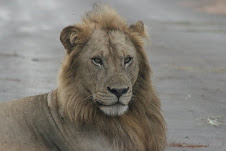
2 packs of painted dogs, 5 lion and several leopards have been recorded in Kasungu National Park in the past 12 months and photographic records have been made.
It is believed that there are only between 2000 and 3000 painted dog left in all of Africa. Cheetah is still known to be present. Painted dog are IUCN listed as endangered, with decreasing populations. Lion and cheetah are vulnerable, with decreasing populations. Leopard is threatened, with decreasing populations.
Kasungu NP borders Zambia on its western flank. Malawi and Zambia co-operate in wildlife research and conservation and a major World Bank-funded ‘peace park’ initiative is being finalized. It is vital both for Malawi and for conservation work in neighboring countries that data is collected so these animals can be protected.
There are existing ties with Painted Dog and other large carnivore projects throughout sub-Saharan Africa.
This project will:
- protect these isolated and at-risk populations of painted dog in Malawi, maintaining the linkages to the Luangwa complex in Zambia
- preserve the carnivores from the threat of disease
- strengthen local law-enforcement by capacity building, using effective training and monitoring for the Department of National Parks and Wildlife scouts
- mitigate perceived wildlife/human conflict, by sensitising local village communities with environmental awareness and education initiatives.
- It contributes to the worldwide species survival plan for Painted Dogs. http://www.africanwilddogssp.com/index.htm.
Project narrative
Statement of Need
Due to the ever increasing population of Malawians all areas are under constant threat. More people are using rivers for bathing and washing, forests are being cut down for fire wood and charcoal as well as being cleared for agriculture. All of this brings the people closer to the wildlife which brings about conflict. The animals know no better so intrude onto the land that they have always inhabited.
Five national parks and four wildlife reserves have been established in Malawi over the years: only two are protected by fences. One was Kasungu National Park, in the central region of Malawi. However, the fences that did exist are regularly vandalized and the wire used to make snares which allows the animals to once again pass into the fields where maize, ground nuts etc. are grown. They are often chased back into the reserves but quite often also cause other problems.
Due to persecution, deforestation and poaching of the wildlife in the reserves of Malawi the number of prey species and therefore the number carnivores has been seriously depleted over many years, mostly since the early 1990s. The government’s Department of National Parks and Wildlife’s own statistics reveal the low levels of mammals and other fauna in their protected areas. Elephant were extinct in Majete Wildlife Reserve until an international foundation stepped in to take over running the reserve.
Lion, cheetah and wild dog are now extinct in all parks except in Kasungu NP. The regular game counts carried out by WESM branches in Malawi’s protected areas show minimal populations of prey species (puku, impala etc) in Kasungu National Park. Even here, they are in very small numbers, distributed all over the reserve. The need to protect these animals is now of significant importance if Malawi is to attempt to keep these small populations alive.
Local villagers are aware of the issues. But poverty and the need to survive leaves them little choice. The DNPW extension workers stationed at Kasungu NP have consulted Traditional Authorities and village Headmen around the park boundary on the Malawi side. They are fully supportive of this work.
Project goals
- To achieve a greater understanding of the nature of the Painted Dog population in Kasungu National Park and its links to other packs in neighboring Zambia
- To contribute to pan-African conservation projects for the Painted Dog
- To set in place future monitoring of the populations to protect the animals from the threat of disease
- To achieve a full understanding of the populations of other carnivores and prey species in Kasungu National Park
- To reduce all forms of poaching in Kasungu NP
- To reduce illegal encroachment in Kasungu NP
- To make more effective the law-enforcement activities of the DNPW scouts in Kasungu NP
- To involve several villages and schools bordering Kasungu NP in regular environmental education and sensitization activities, particularly related to Painted Dogs
Conservation benefits
Project objectives
- The project aims to purchase and fit 2 satellite radio collars to 2 painted dogs and monitor their movements over the next 3 years (the expected life of the collars). Software and telemetry will also need to be purchased. Satellite radio collars are important because Kasungu National Park is large (2316 square kilometers). Because of the understandable lack of investment by the Malawi Government due to other budget pressures, the roads network in the park has not been maintained well. Movement around the park is so limited that the usual hand held telemetry would not be effective when the dogs are out of range of the receiver. This necessitates the use of a 4 x 4 vehicle. Information gathered will be shared with other organizations both nationally and internationally.
- A photographic survey needs to be continued with the objective of determining the numbers and distribution of painted dog and other large carnivores left in the park. Cameras will be placed on certain trails known to be used by these animals and images will be studied to determine their numbers and sex. It is a common belief that there are many leopards in the park. However early research has identified that many sightings are of the same leopard patrolling his home range. Information regarding the wildlife will be sent to other organizations worldwide to help with their data collection on carnivores present in Africa.
- The DNPW in Malawi employ several extension workers who visit local communities to educate local people, working with school-based wildlife clubs and with village natural resources management committees. Due to the government’s financial constraints already explained, this work is almost non-existent and the local communities very rarely see representatives from the national park. Now that we have evidence of the endangered painted dog it is imperative that the local communities surrounding the park are educated in their conservation. The project includes training for the extension workers so that they can visit some of the larger communities close to Kasungu NP and educate them on wildlife protection and conservation. The project aims to supply their means of transport, fuel to reach these communities, training materials and transport/refreshment allowances for attendees – but NO attendance allowances. WESM has a policy not to pay people merely to attend training, as people are tempted to attend just to obtain money, not because they have a real desire and willingness to learn and be involved. Communities to be targeted are on the Malawi side of the park and include: Nthunduwala, Linyangwa, Kaswanchenje, Kaphaiza, Chulu and Chisinga.
· The DNPW scouts add a lot of information to the project through their reporting of wildlife throughout the park. However their identification of spoor is not always very accurate and their skills in anti-poaching are not effective. Intensive training for many of the scouts is required, preferably by the manager of scout monitoring, funded by IFAW, at Liwonde National Park. This experienced law-enforcement officer had major successes reducing poaching to almost nil at Nyika National Park, in the north of Malawi. The project includes this training and monitoring of achievements. At present the Department of National Parks and wildlife are planning on developing Kasungu National Park with the hope of returning it to its previous status of the premier game park of Malawi although funding is very limited. They have increased the numbers of scouts patrolling the park for poachers to 60. They are hoping to repair/replace the electrified fence around the park funded many years ago by the British Government and plan to build an inner sanctuary for the restocking of wildlife. Houses for the staff are being built and roads are being graded to ensure faster reaction times of the scouts when chasing poachers.
Scope of the project
- 2 painted dogs will be fitted with radio collars, possibly the Alfa male and female. The signal will be used to track the dogs wherever they are. The satellite will send information to a computer and this data will be collected and stored for scientific research.
- The project has 8 infra red cameras, which it intends to increase the number of, which it will use to investigate the large carnivore populations inside Kasungu National Park by placing the camera traps on trails known to be used by painted dog and other large carnivores. These will be monitored frequently.
- Photographic data sheets will be made and analysed to establish what animals exist to help assess their territory size, habitat and population density.
- Transects both on foot and in a vehicle will be carried out within the park on a daily basis where possible.
- Park extension workers will be trained to run an education program for the local communities, wildlife clubs, farmers and school children to increase awareness of the importance of large carnivores and conservation in their areas. Regular meetings will also be held with interested parties such as the Traditional Authorities and Village Headmen: small community-based work groups will be trained in the area of conservation. There will be monitoring of the activities of the extension workers and attitude changes in the local community.
- The project will train most if not all 60 law-enforcement scouts in anti-poaching methods and set in place regularly monitoring of activities.
- Progress reports will be forwarded to all interested parties annually and reported on the project web site and blog so that these can be seen nationally and internationally.
Project monitoring and evaluation
The 4 main areas where results can be measured are:
1. Photographic survey.This can be measured by the number of photographs collected and documented over the survey period. The number and distribution of species will be recorded as well as data sheets made up on individual animals where appropriate. i.e. Large carnivores. This work will continue as funding is received and will continue for the length of the 3 year project. Data sheets will be used to identify individual mammals.
2. Collaring of the dogs.
This can be measured by collecting the data on GIS of the movements of the dogs. This information can be used to target training of the local communities in the areas where the dogs are most often found.
3. Extension work.
The extension work can be measured by collecting the information regarding numbers of attendees and determining whether there has been an increase in village/national park communication in terms of animal sightings, informant information regarding poaching activities and ultimately in recording a decrease in poaching activities in the park.
Also data can be collected to see if it has helped to improve the conservation of the wildlife in Kasungu National park as well as helping sensitize the local communities and enable them to use more of the natural resources available to them through the national park.
4. Scout training.
The National park keeps records of numbers of scout hours spent in the bush on patrol and how many arrests they make and this can be compared with new data collected after the training. Data is also collected on firearms and equipment confiscated and this can be treated in the same way. The training will also help sensitize local communities through a more effective approach to law enforcement policy. This can be measured by seeing if the number of village informants increases.
The project aims to inform both nationally and internationally the importance of large carnivores in Malawi and this can be measured through communication through the web site, blog, reports and e-mails to other stake holders in the conservation of wildlife in Malawi.
Goal | Monitoring method | Evaluation |
To achieve a greater understanding of the nature of the Painted Dog population in Kasungu National Park and its links to other packs in neighboring Zambia | Capture images of the dogs and record sightings and compare these to known populations recorded by PDC Zambia. | If comparisons do not compare we know we have different packs. If they do compare then we know that the dogs travel internationally. |
To contribute to pan-African conservation projects for the Painted Dog | Information regarding the dogs and other carnivores will be shared with other groups throughout the world regarding our findings. | |
To set in place future monitoring of the populations to protect the animals from the threat of disease | Hunting using packs of domestic dogs are the main threat to the wild dog population. | Compare annual results gained by park staff to trends of recorded dog hunting activities. |
To achieve a greater understanding of the populations of other carnivores in Kasungu National Park | Camera traps, road and foot transects will be used to monitor and record all sightings of all carnivores. Identification sheets and sighting forms to be distributed to staff and tourists and reports can be generated from these forms. | Evaluation will be to measure the number of forms and sightings being recorded. |
To reduce poaching in Kasungu NP | DNPW keep annual records of numbers of poachers caught and these can be analyzed to spot any trends. | Monitor results recorded by DNPW on the poaching activities recorded. |
To reduce illegal encroachment in Kasungu NP | At present there is significant encroachment into the park from Zambia. Ariel photos have been taken of the worst areas and are being monitored. The Malawi and Zambian governments are working together and have issued a time table for the Zambians to leave Malawi. The use of these ariel photos will be used to monitor this encroachment. | All Zambians to have left their illegal farms based in Malawi by the end of 2011. Ariel photos used to evaluate results. |
To make more effective the law-enforcement activities of the DNPW scouts in Kasungu NP | DNPW keeps records of law enforcement activities in the park. Number of patrols, hours spent in the park and areas covered are monitored. A local network of informers has been set up who inform the park staff as to illegal activities in and around the park. Training will make this more effective. | Compare reports of effectiveness of scouts on annual basis. |
To involve several villages and schools bordering Kasungu NP in regular environmental education and sensitization activities, particularly related to Painted Dogs | Once sensitized, monitor the level of communication from the local communities to the park management regarding movement of wildlife outside the park. | Compare known results of communication between the local communities and the park staff. |
Delay in the project or no action
As already stated Malawi is a very poor country and although it invests as much as it can into protection of its game parks this is never enough.
Poaching, encroachment, and deforestation continues in Kasungu National park, both from the Malawi and Zambian sides of the park. The government is working hard with the Zambian government to reduce the problems from Zambia but the animal population is being decimated and the law enforcement officers and park management are struggling to provide adequate protection to the park due to lack of funding. If the project cannot raise funds to assist the department in its activities then the problem will get worse to the point where the ecology of the park and its wildlife will be unrecoverable. Kasungu used to be the premier park of Malawi but over the last 30 years the animal population has decreased. There used to be over 2000 elephants there are now only about 100 left. Cheetah, lion and even black rhino used to be regularly seen but these are all but extinct in the park now.
Sustainability of the project
The survey of the park will continue as long as the project is supported financially. Local support will develop along with the training of both law enforcement officers and extension workers and once these operatives have been trained their skills can be maintained by the DNPW at minimum cost. As Malawi develops it the aim of the government to develop its game park for tourism and is actively encouraging external investment from large international organizations through building new lodges and ensuring they have the right people in place for the development of their game parks for the future.
Wild dogs have a very high potential to attract tourists to Kasungu and the government is now aware of these news packs of dogs and is advertising this to relevant parties. With the increase in tourism comes wealth both for the park and for the local communities.
How will we measure our major success
The focus of this project is protecting and preserving the packs of Painted Dog which have been identified in Kasungu National Park and relating them to other conservation efforts for this marvelous animal in southern Africa.
Our single measure of success will be to see if the two packs remain, healthy, in the park and the population of the packs expands.
It is the belief that the main threat to the dogs is poaching. By monitoring the movements of the dogs we will know where to concentrate our efforts to protect them both in terms of law enforcement and extension work.
The climate in Malawi is unpredictable at best. If the rains come too late or finish too early then crops can fail and this can cause wide spread starvation which in turn will lead to increased poaching. By investing in the project the effects of this will be kept to a minimum.
Tobacco is the main cash crop grown locally and there are many pressure groups trying hard to reduce or even ban this product which again will lead to mass starvation for these Malawians that border the park. By helping to develop the park this may lead to local employment and development.
Links to local and global conservation priorities.
The government is looking to develop all of their national parks and to do this they need external help.
Many groups throughout the world are now aware of the efforts that this project is achieving and support the project in terms of expertise and advice. We are hoping to run a workshop, later this year, to discuss with many groups the possibility of reintroduction of various predators to some of the game parks of Malawi.
Groups such as EWT in South Africa, Chicago Zoological Society, ZSL, WESM, MEET, PDC Zimbabwe and Zambia, Netty Purchase, regional co-ordinator of the cheetah conservation strategy as well as many more.
Other organizations that are aware of the project include, National Geographic, BBC, Born Free, Lilongwe Wild life centre, Foundation, Centre for wildlife management Pretoria, David Shepherd Wildlife Foundation, WWF, several universities world wide, Etc.
Expertise and track record of partners
The Wildlife and Environmental Society of Malawi originated in Blantyre in 1947 then when the Lilongwe Branch was formed in 1976, Blantyre became a branch of the society. It has just held its 34st Annual General Meeting. Blantyre members of the society were instrumental in persuading the Malawi Government in setting up Malawi’s National Parks and Wildlife Reserves. Blantyre Branch has continued to give strong support to the Department of National Parks and Wildlife throughout Malawi. Blantyre Branch now has over 100 active individual/family members, 14 corporate/business members and over 320 affiliated school or community based wildlife clubs.
The society’s vision is: for all people in Malawi to coexist in harmony with their natural environment. Its mission is: to promote full public participation in wise management of wildlife, natural resources and environment in Malawi.
One of the main thrusts of the society and the branch has always been environmental education and it has had major successes over a number of years. The branch built the students’ hostel in Lengwe National Park (the first in Malawi), began the Wildlife Clubs Newsletter, and produced a range of educational resources including the Lengwe Student Workbook, Lengwe Visitors’ Guide and the Mammals of Malawi Posters. Recently the branch has organised the refurbishment of Lengwe and Liwonde student hostels and the renovation of the Michiru Education Centre.
Considerable support is given to Michiru Nature Sanctuary as it is more accessible for the many Blantyre schools. This support includes the funding of the hyena hide, a picnic spot, an ablution block, trail and road maintenance, publishing a trail guide and the funding of six of the patrolmen. The branch also provides a subsidy to schools making visits to any of the national parks in the region.
For ordinary members the branch organises monthly talks, produces a regular newsletter, arranges visits to wildlife areas, carries out regular game counts and co-ordinates the production of the WESM Wildlife Calendar that has proved a major fundraiser for the whole society.
The branch employs one Wildlife Clubs Coordinator to enable the continued development of wildlife clubs and has an active committee of volunteers who dedicate their time to the running of the branch and its activities.
Project Manager Duncan Yearley is a 56 year old, retired engineer from England who has given up his home and job in the England and has now dedicated his life to conservation in Africa.
He has:
7 years experience as Engineering Officer in the Merchant Navy.
28 years working at Mars confectionary in the U.K. (a large company with a turnover of $30 billion per annum and 60,000 employees world wide).
Gained a great deal of experience on several projects in Africa including:
· ECO and FGASA training in South Africa.
· Cheetah conservation in Botswana.
· Research volunteer on Big 5 reserve in Nambiti in South Africa.
· Scout for Rhino project in Swaziland. Research of reptiles in Swaziland.
· Lions in Zimbabwe.
· Painted dog Research in Zimbabwe.
· Painted dog research in Hluhluwe,
· South Africa. Ecological research volunteer in Hwange, Zimbabwe.
· Street boys on Manzini, Swaziland.
· Training of scouts in Thuma Forest Reserve in Malawi.
· Outreach projects for WAG in Malawi.
· Help with palliative care clinic in Malawi.
· Camp manager for baboon release program for Born Free foundation in Malawi.
At present he is running Carnivores Conservation Malawi which is a pilot photographic survey project of the wildlife in the national parks of Malawi.
Grants administrator Lindsey Macdonald is voluntary branch manager of Blantyre Branch of WESM. She is managing a three-year $40,000 donor-funded environmental education project, including managing the budget, planning and delivering the quarterly work plan. We have over 350 school and community wildlife clubs in Blantyre, with over 18,000 individual members. We produce a termly newsletter, carry out regular visits to clubs, organise school trips to national parks, run termly zonal meetings for club leaders, run termly training courses on environmental education, and promote and monitor alternative income generation projects such as creating tree nurseries, vegetable growing.
She is also voluntary treasurer for the Society of Malawi, managing a range of bank accounts, reporting monthly to the committee on income/expenditure and suggesting ways to keep costs down and improve income. The Society of Malawi runs a public library and collection of artifacts important to the history and culture of society at the historic Mandala House in Blantyre and a transport museum at The Heritage Centre, Limbe. We also organise monthly public lectures and monthly outings to sites of historic or cultural interest.
Before moving to Malawi for her husband’s teaching post, she was Director of Customer Care and Communications
At Trafford Metropolitan Borough Council in the UK. At Trafford she managed around 260 staff, 190 in libraries and customer service centres; 60 in the council’s IT department and 6 in the communications and consultation unit. This included all HR issues (including organisational development planning, recruitment, disciplinary/grievance issues and redundancies) and financial planning and management, with a directorate annual revenue budget of around £6m and a three-year rolling business plan.
She previously worked for Tameside and Blackburn with Darwen Councils. She holds a BA from Durham University and post-graduate diploma in journalism. Through CIPR continuing professional development she is qualified in communications, market research and community involvement projects.
Also involved will be:
Dyce Kamwana, DNPW law enforcement manager at Kasungu National Park. He holds a Malawi diploma in natural resources management.
Wisley Kawaye, DNPW head of extension workers at Kasungu National Park. He holds at BSc in biology.
Edson Sichali, DNPW parks and wildlife research officer at Kasungu National Park. He holds a diploma in wildlife management.
Institutional and other benefits
Taronga Zoo has its own unique population of wild dogs which acts as ambassadors for the long term survival through education of the viewing public. If Taronga zoo supports this project it will give the zoo the ability to educate the public about the wild dogs that it is supporting in the wild. Up to date news on the wild packs movements, progress, breeding habits, denning sites, possible food sources and other aspects of their lives. This information, live from Kasungu, can be then used to help raise the ecological issues of Africa both nationally and internationally. Information that Taronga zoo has gained through research on its own pack s can be fed to the project to help with issues that it might find useful. The above also applies to the other species that are studied in Kasungu which are held in Taronga zoos.
Most staff of zoos do not have the experience of working or living in the bush studying the Flora and Fauna. This project can give staff and researchers the opportunities to visit and work on the project and experience the sharp end of the project and bring both their experiences and new found skills to the zoo. Interaction with the scouts and law enforcement officers as well as the local communities we broaden the views of individuals. Hands on experience is key to good understanding of a project. There is one thing talking about going on patrol, walking transects in the bush or carrying out a snare sweep but it is a totally different thing actually doing it when you might be surrounded by wild animals.
The project is now building an international following of supporters and interested parties and the association and support given by Taronga will be known by these organizations and individuals internationally. The project has a web site and blog that will advertise Tarongas involvement and can add a link to the zoos web site. If the zoo can give me stickers for the land rover then these can be put on the project vehicle to advertise their support.
At present the project has experience and support working with members of the Department of National parks and wildlife, Chicago Zoological society, MEET (Malawi environment and endowment trust) and, WESM (wildlife and environmental society of Malawi).
Global warming and climate change.
‘One World’ has a very good report on global warming and its effects on Malawi and details can be seen on www.oneworld.net/guides
It states:
The priority projects identified in the country's National Adaptation Programme of Action (NAPA) therefore focus on poverty reduction strategies relating to agriculture. They include improved grain storage facilities, diversification of crops and afforestation.
From the point of view of the project the more it can do now to stop encroachment and wood poaching in the park the better the area will be equipped for the unknown future of climate change in the future. As the park redevelopes, wealth will return to the area. Education of local villagers regarding slash and burn and the destruction of their environment can be included in the training that they are given. Most Malawians do not have radio or television and are not even aware of the terms Global warming, environment and climate change.
Once the government has cleared the Zambians from the Western borders of the park the areas can be replanted with indigenous trees although in an area like this it only takes about 5 years for an area that has had crops grown on it to return back to the bush.
Budget
Note 1 lt of diesel costs AUD 1.6 | TARONGA | WESM | CCM | ||||||||
Budget item | Cost calcs (1 year) | Total for 1 yr | yr 1 | yr 2 | yr 3 | yr 1 | yr 2 | yr3 | yr 1 | yr2 | yr3 |
Personnel | |||||||||||
notional salary project manager | 12 x 1000 | 12000 | 0 | 0 | 0 | 0 | 0 | 0 | 12000 | 12000 | 12000 |
fees and transporation for vet and collaring team | 1 x 2000 | 2000 | 2000 | 0 | 0 | 0 | 0 | 0 | 0 | 0 | 0 |
notional salary grant admin | 12 x 500 | 6000 | 0 | 0 | 0 | 6000 | 6000 | 6000 | 0 | 0 | 0 |
Travel | |||||||||||
Diesel - following painted dogs, monitoring motion cameras | 12 x 600km/9 (mileage rate)x 1.60 | 1280 | 1280 | 1280 | 1280 | 0 | 0 | 0 | 0 | 0 | 0 |
Diesel for community sensitisation visits and activities | 12 x 200km/9 (mileage rate)x 1.60 | 427 | 427 | 427 | 427 | 0 | 0 | 0 | 0 | 0 | 0 |
Diesel for grant admin audit visits | 4 X 400 km/9 (mileage rate) X 1.60 | 284 | 284 | 284 | 284 | 0 | 0 | 0 | 0 | 0 | 0 |
Lodging and meals | |||||||||||
camp foodsupplies etc for 2 monitoring volunteers | 12 x 200 | 2400 | 1200 | 1200 | 1200 | 0 | 0 | 0 | 1200 | 1200 | 1200 |
Equipment | |||||||||||
2 satellite collars/ soft ware | 2 x 3400 | 6800 | 6800 | 0 | 0 | 0 | 0 | 0 | 0 | 0 | 0 |
Second-hand 4 x 4 | 1 Toyota Hilux or similar | 11000 | 11000 | 0 | 0 | 0 | 0 | 0 | 0 | 0 | 0 |
computer printer and software | 1 X200 | 200 | 200 | 0 | 0 | 0 | 0 | 0 | 0 | 0 | 0 |
motion cameras | 4 x 250 | 1000 | 1000 | 0 | 0 | 0 | 0 | 0 | 0 | 0 | 0 |
Supplies | |||||||||||
maintenance of vehicle | 12 x 100 | 1200 | 1200 | 1200 | 1200 | 0 | 0 | 0 | 0 | 0 | 0 |
set of tyres | 4 x 386 | 1544 | 1544 | 0 | 0 | 0 | 0 | 0 | 0 | 0 | 0 |
bank charges | 12 x 6 | 72 | 0 | 0 | 0 | 72 | 72 | 72 | 0 | 0 | 0 |
camp running costs (paraffin for lights etc ) | 12 x 20 | 240 | 240 | 240 | 240 | 0 | 0 | 0 | 0 | 0 | 0 |
airtime for mobile phones/internet use | 12 x 25 | 300 | 300 | 300 | 300 | 0 | 0 | 0 | 0 | 0 | 0 |
office costs (stationery, printer ink etc) | 12 x 20 | 240 | 240 | 240 | 240 | 0 | 0 | 0 | 0 | 0 | 0 |
snare bounty for DNPW scouts | 12 x 50 | 600 | 0 | 0 | 0 | 600 | 600 | 600 | 0 | 0 | 0 |
Env Ed materials for villages/schools - posters, booklets etc | 300 | 0 | 0 | 0 | 300 | 300 | 300 | 0 | 0 | 0 | |
Transport subsidy for villages/schools to visit Kasungu | 12 tripsxAUD 30 to vehicle hire | 360 | 360 | 360 | 360 | 0 | 0 | 0 | 0 | 0 | 0 |
Training courses | |||||||||||
Law-enforcement/poaching refresher courses for 60 scounts | 80 x 5 days x 20 allowance, lecturer costs, equipment | 8000 | 8000 | 0 | 0 | 0 | 0 | 0 | 0 | 0 | 0 |
EE sensitisation course for DNPW 2 extension workers | 2 x 5 days x 10 allowance, lecturer, materials | 100 | 100 | 0 | 0 | 0 | 0 | 0 | 0 | 0 | 0 |
Totals | 56347 | 36175 | 5531 | 5531 | 6972 | 6972 | 6972 | 13200 | 13200 | 13200 | |
Taronga total 3 years | 47237 | ||||||||||
WESM total 3 years | 20916 | ||||||||||
CCM total 3 years | 39600 | ||||||||||
TOTAL PROJECT COST | 107753 | ||||||||||
Notes to the budget
The budget is based over 3 years
Government endorsement



.jpg)